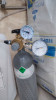
Help with keg yeast brick

Mastoras007

Well-Known Member
Trial Member
Established Member
Joined
Jun 14, 2023
Messages
601
Reaction score
385
Points
63
Hello,
I just received a yeast keg brick (not sure if I'm telling it right)
Use for this tank is to store the yeast for reuse.
Im wondering if some mistake happen or not because is not like what i was waiting to receive.
Not have bottom valve.
Any help if i can use it,or if not what is the use for this
IMG_20251104_215425.jpg
IMG_20251104_215431.jpg
IMG_20251104_215443.jpg
IMG_20251104_215615.jpg
IMG_20251104_215626.jpg
IMG_20251104_220241.jpg
 
Last edited:
Hello,
I just received a yeast keg brick (not sure if I'm telling it right)
Use for this tank is to store the yeast for reuse.
Im wondering if some mistake happen or not because is not like what i was waiting to receive.
Not have bottom valve.
Any help if i can use it,or if not what is the use for thisView attachment 33431View attachment 33432View attachment 33433View attachment 33434View attachment 33435View attachment 33436
That is a Yeast Brink, a place to store and perhaps propagate yeast. Here is a website that sells something like that.

All the ones I found on the internet have a port at the bottom. The fact yours doesn’t have one is strange.

I know nothing about them, but I guess you need a place to store yeast if you are brewing professionally.
 
Hello,
I just received a yeast keg brick (not sure if I'm telling it right)
Use for this tank is to store the yeast for reuse.
Im wondering if some mistake happen or not because is not like what i was waiting to receive.
Not have bottom valve.
Any help if i can use it,or if not what is the use for thisView attachment 33431View attachment 33432View attachment 33433View attachment 33434View attachment 33435View attachment 33436
that is not like any of the yeast brinks that i have ever used. The brinks that we had were cut and welded 15.5gal(1/2 bbl) kegs with a 4 inch tc on top and port on the bottom side wall. would have been nice if they had legs/wheels and a valve out the bottom middle, but that was not what we had.

at our scale, we had 4-5 yeast brinks, atleast 3 full at all times, rolling 2 brewing shifts a day 4-5 days a week. we had super strict cleaning requirements for the brinks an then to top it off we also burned them at 180 for a minimum of 30 mins before we purged and filled them.


my only guess is that maybe you flip it over to pull the yeast out.

i am not really sure what the tiny carb stone looking thing in the enclosure is for? maybe you can flip it over and use it to carb a small amount of beer???

i like the hose grip situation you have going on there looks comfy lol.

i am guessing that is a blow off/PRVR setup in the middle?

that closure system looks sketchy for pressure work.


Soap box about repitching yeast vs using fresh yeast:

Repitching is certainly do able, but requires a fair amount of timing, cleanliness, and knowledge to get it right consistently. When you are making a living at it, you really dont want to roll the dice with bad ferments or infections.

I have been doing this for years and have a small-ish system with lots of different yeast in house and I happily dont repitch yeast. the beers/fermentation time/attenuation/etc are all very very consistent.

if you are intent on doing this, you need to really dig into reading about yeast management and invest in some lab equipment and understand the time required todo the labwork before you pitch. You dont need a lot of gear, but you will need a good microscope/slides/pipets/whatever the hell the yeast count grid slide thing is and the time todo it.

not being negative, you can do it, but on a small setup with limited gear/space/time it probably isnt worth the effort. Also know that once you pull yeast you basically have to be brewing within a window or your viability will be gone and you will be buying more yeast anyway. Your yeast will dictate your schedule especially while you are getting up and running this may be a challenge.


since you are brewing lagers? you can front load your tanks and basically brew as fast as possible. for a min and then lager all of the beer and keep it cold in the tanks until you sell it. While doing that, i would not use the brink, i instead would cone to cone transfer the yeast using your clean and sanitized product lines. it is hard to know your volumes when doing this as yeast is not a consistent...consistency and the flow will vary somewhat based on how thick the yeast is.
 
Last edited:
Few days ago arrived the tanks, with the tanks i bought also this "keg yest brick" didn't saw before shipment.
Anyway was very cheap not sure if I'm going to use it or not,
I asked chat gtp, send some photos the answer is that the carbonation stone is air filter for connecting co2 adaptor
The black in the middle is valve that yeast coming out from there via the spear (because of the co2 pressure)
You have mentioned (frew times) you are not suggesting me to reuse yeast, truth is I'm planing to do it, i made some research about it, the equipment needs for viability measurements is not that crazy, and the process is not that difficult, i will dive in and explore all those things
cone to cone sounds very better sure I will try it
Anyway i have many things that i must complete first before all those
I'm not playing to brew lager at least first year

The cone to cone transfer how you do it?
Transfer wort first then the cone?
 
Few days ago arrived the tanks, with the tanks i bought also this "keg yest brick" didn't saw before shipment.
Anyway was very cheap not sure if I'm going to use it or not,
I asked chat gtp, send some photos the answer is that the carbonation stone is air filter for connecting co2 adaptor
The black in the middle is valve that yeast coming out from there via the spear (because of the co2 pressure)
You have mentioned (frew times) you are not suggesting me to reuse yeast, truth is I'm planing to do it, i made some research about it, the equipment needs for viability measurements is not that crazy, and the process is not that difficult, i will dive in and explore all those things
cone to cone sounds very better sure I will try it
Anyway i have many things that i must complete first before all those
I'm not playing to brew lager at least first year

The cone to cone transfer how you do it?
Transfer wort first then the cone?
When I saw a professional brewer transfer yeast cone to cone, he connected a hose to the first tank’s cone and used some wort (beer, really, as it finished fermenting) to push the yeast sludge into the second tank, then filled that tank with cooled wort. Maybe 5 gallons (from 500) were used to push the yeast.
 
No way I would save yeast or even cone-transfer until every other detail of your operation is nailed down and the brewery is producing consistently good batches in a timely manner. It's just too easy and economical to use a new pitch of dry yeast for each batch. The quality and variety of dry yeast for pro-style brewing is outstanding. There's never any doubt about pitch rate, no special handling, fast start and consistent, predictable fermentation.
I've kept and used slurry when brewing big batches and when it's good, it's very, very good but when it a little bit off in any way, fermentation time and attenuation can suffer, not to mention the quality of the beer. You need good beer flowing non-stop. One bad batch or even a slow one can set you back badly. Don't take any chances.
 
basically you are using head pressure on a cooled(60f) or crashed(as cold as you can get it) tank to push the yeast through a cleaned and sanitized brew line into the next tank.

generally speaking we would have already run micro and cell counts on the yeast before we pushed it into a new tank.

you are pushing the yeast slurry(after you dump the old cells and crap out of the bottom of the tank) and packing up your brew line and then pushing that clear with cooled wort from the batch that you are brewing.

@Mastoras007 i would nail down the whole process, get a into the groove of making solid beer and then worry about yeast management. It will add some cost to each batch, but that cost is less then the potential losses of dumping a batch or especially putting out a bad product and loosing customers.

It is important to remember that you only get one chance to make a first impression on your customers.

obviously it is do able, but sincerely i would get every thing else dialed in before i dug into that variable.
 
I will add a somewhat cynical note: You seem to be figuring a lot of things out as you go, which is probably not the best way to start a business. You would be foolish to add any variables that will increase the complexity of a process that you don't seem to have a handle on yet. ;)
 
I consider all your advices, I will not reuse yeast, for sure first 20-30 batches
At least i must make some starter, or double batch 500-500 liters with 24h delay so to use first batch kinda of starter (we have discussed before that method)
I really don't want to pitch 1+kg of yeast for 1 batch!
 
I consider all your advices, I will not reuse yeast, for sure first 20-30 batches
At least i must make some starter, or double batch 500-500 liters with 24h delay so to use first batch kinda of starter (we have discussed before that method)
I really don't want to pitch 1+kg of yeast for 1 batch!
If you can manage to move yeast from fermenter to fermenter with a completely enclosed system and time it so that you're dropping yeast from one batch directly onto another so that it can ferment immediately, that would be a good method. It will take some guess work in the beginning to determine exactly how much to harvest but you could have good success with that.
Since you will have to brew a few batches before you get started selling, you'll have some time to experiment a little with your system.
 
If you can manage to move yeast from fermenter to fermenter with a completely enclosed system and time it so that you're dropping yeast from one batch directly onto another so that it can ferment immediately, that would be a good method. It will take some guess work in the beginning to determine exactly how much to harvest but you could have good success with that.
Since you will have to brew a few batches before you get started selling, you'll have some time to experiment a little with your system.
In the begining I will brew 3-4 batches without malts, just water to see temperatures, tanks temperature control system, evaporation rate etc.
Anyway i have long road ahead of me
I will not use for now that keg
 
In the begining I will brew 3-4 batches without malts, just water to see temperatures, tanks temperature control system, evaporation rate etc.
Anyway i have long road ahead of me
I will not use for now that keg
that is very normal. we call that a water batch or a commissioning run. It is actually very very important. you need to run a full heavy CIP on all of your gear starting with a hot water(180F) rinse to clean the manufacturing funk up.

look at your CIP chemicals and do a 1 hour run at a high chemical percentage(stay within the recommended range). Full hot rinse after caustic spinning all the pipes. strong acid spin, rinse and then leave them open to the air. the day before you brew, you should do another full CIP Cycle on the tanks. You can also use a relatively strong acid solution to wipe down all of the exterior. this will help prevent rust in the future. Look up "passivation cycle for new brewing equipement" online.

you also need to clean your whole brewhouse and all of your pipes and hoses with the same process.

****get an eye wash station or atleast those squeeze bottles, a shower is also good...i have had to use one which is un-fun... safety glasses...properly rated gloves(preferably with a cotton liner)...be sure you know where your E-stops are. Keep a cold water hose in easy reach any time that you are boiling wort. understand where the boil over will go if it goes. THIS IS LEGIT IMPORTANT>>>BREWERS DIE ON A REGULAR BASIS FROM BOIL OVERS>>>BEST CASE IS LIFE CHANGING BURNS****

your first batch you should run with cold water. pump it through the brewhouse all the way and then dump it. get used to the process, dont deadhead pumps or slam valves shut. understand input and output of you pumps. test water temps and flow rates.

I know it seems expensive, but using fresh yeast gives you the best chance of success while you are getting your gear up and running. cheaper in the long run.

i brew double batches pretty frequently. brew one day pitch yeast, brew on top the second day. that is very normal.
 

Back
Top