
Wyeast 2124

FeralBrewMinster

Member
Premium Member
Established Member
Joined
May 2, 2022
Messages
34
Reaction score
22
Points
8
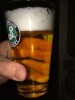
Hello, I am trying to figure out what cause my hazy results for my bohemian pilsener, I used wyeast 2124(culprit?) and North star pils. Both new to me, and the beer tastes good, but a heavy gelatin fining in keg failed to clear the beer after 14 days. I brewed 2 other beers at the same time and they are crystal clear(diff yeast/ingredients). May use for irish moss next time even though i hate the idea of adding carrageenan, but this beer would be perfect if it was more crisp, and the haze is giving her a little too much body to really shine. It is my kingdom come bohemian pilsner recipe, also contains ginger and coriander(have had no issues previously from them in this recipe, only the yeast and NS pilsener are new modifications)
 
Last edited:
What was your mash schedule like? Many things can cause haze. Protein in the grain is one possibility.

I would suggest more time. 10 days is really not that long for a pilsner.
 
Yes I agree with the aforementioned post. My theories on haziness is rooted around how high the temperature is while boiling the mash. Also no two yeast strands are the same, kind of like fingerprints so I would toss it up to the possibility of it just being a fluke in your yeast.
 
Haze also has a little to do with your dip tubes. Original corny keg length is designed to get as much soda syrup out as possible. I cut mine an inch shorter. Sure, I lose some beer, but the 'stuff' the gelatin drops out ends up somewhere, and that's the bottom of the keg.

Some use floating dip tubes.
 
What was your mash schedule like? Many things can cause haze. Protein in the grain is one possibility.

I would suggest more time. 10 days is really not that long for a pilsner.

It was brew in a bag so I put the grains in at 160 and kept it around 155 for 1 hour, I also did a triple decoction, but essentially the three beers I brewed followed almost identical protocols, two ales one lager yeast. Both ales cleared(wyeast scottish and wyeast british ale 2). Beer spent 10 days in primary, and sorry about the error earlier, 14 days in keg just checked my photos.
 
Yes I agree with the aforementioned post. My theories on haziness is rooted around how high the temperature is while boiling the mash. Also no two yeast strands are the same, kind of like fingerprints so I would toss it up to the possibility of it just being a fluke in your yeast.

I will try the recipe again and pay extra close attention to temps, but to my knowledge I didnt have any errors. Im pretty consistent with my brewing, going on around 40 brews(not a ton but quite a few, started last year)
 
Haze also has a little to do with your dip tubes. Original corny keg length is designed to get as much soda syrup out as possible. I cut mine an inch shorter. Sure, I lose some beer, but the 'stuff' the gelatin drops out ends up somewhere, and that's the bottom of the keg.

Some use floating dip tubes.
That would also make sense, as lager yeast sits on bottom, I just thought it would have cleared out as ive pulled about 2 gallons out of it for friends.
 
It was brew in a bag so I put the grains in at 160 and kept it around 155 for 1 hour, I also did a triple decoction, but essentially the three beers I brewed followed almost identical protocols, two ales one lager yeast. Both ales cleared(wyeast scottish and wyeast british ale 2). Beer spent 10 days in primary, and sorry about the error earlier, 14 days in keg just checked my photos.
So the strike water was 160? 155 is a little on the high side, but still should have worked. Next time try a protein rest at 122 and then heat it up. Your decoction should be able to raise it
 
Well it's not the yeast. So it must be the malt. Did you use NS Pilsner malt in all 3 recent beers, or just the hazy one?
It's not the malt either. I use both the yeast and the malt a lot. 2124 is a great yeast, but it's not the fastest to clear, but it's not bad. North Star Pils malt is low in protein and is a great malt for American lagers. It clears just fine.

I have had a beer every now and then that takes a while to clear. Like stated above, there are a lot of different reason the beer won't clear it's nearly impossible to figure it out brewing just the one beer. But if it keeps happening, make notes on how long it took to clear, yeast strains, mash conditions, finings, adjuncts, ect.

It's not that unusual to have to lager 6 weeks to get a brilliant beer without filtering. Using finings in the serving keg is not ideal because the finings are on the bottom and can add to the turbidity until the finings make there way out. If you really need a beer clear fast, floating dip tubes is the way to go. Sometimes these lagers take some time, so sometimes patience is the key ingredient to a great beer. Sorry for the lame platitude/pun.
 
Last edited:
So the strike water was 160? 155 is a little on the high side, but still should have worked. Next time try a protein rest at 122 and then heat it up. Your decoction should be able to raise it
Ive had some issues with using decoctions to raise temp(winter outside etc), my decoctions take about 30 minutes each, and it is enough to maintain the temp of the mash, with the mash sometimes with 3 decoctions I run to about 80-90 minutes, but it hasnt caused an issue with clarity before. I have done the traditional step mash about 6 times and honestly was not getting much improved taste clarity etc, so I went back to using a strike temp and maintaining that temp with decoctions, I pull out ~about~ a gallon of grains with each decoction(15-20% of total)
 
Well it's not the yeast. So it must be the malt. Did you use NS Pilsner malt in all 3 recent beers, or just the hazy one?
One other ale had north star pils and it cleared, but this had 23% the other had around 5%
 
It's not the malt either. I use both the yeast and the malt a lot. 2124 is a great yeast, but it's not the fastest to clear, but it's not bad. North Star Pils malt is low in protein and is a great malt for American lagers. It clears just fine.

I have had a beer every now and then that takes a while to clear. Like stated above, there are a lot of different reason the beer won't clear it's nearly impossible to figure it out brewing just the one beer. But if it keeps happening, make notes on how long it took to clear, yeast strains, mash conditions, finings, adjuncts, ect.

It's not that unusual to have to lager 6 weeks to get a brilliant beer without filtering. Using finings in the serving keg is not ideal because the finings are on the bottom and can add to the turbidity until the finings make there way out. If you really need a beer clear fast, floating dip tubes is the way to go. Sometimes these lagers take some time, so sometimes patience is the key ingredient to a great beer. Sorry for the lame platitude/pun.

Thank you, Im going to brew it again hopefully this weekend and be extra mindful. Yea I generally gelating fine in the bucket and then use my larger size bouncer(smallest filter, white screen) filter to grab onto the gelating cleared beer and it usually works surprisingly well, but this time for the sake of time i did the filter then gelatin fined in the keg, probably wont do that again. I will leave the the keg on 40f and compare it to the one i brew this weekend to see if the newer batch clears faster. Hopefully my cloudy beer is not a symptom of arrogance or over confidence that resulted in me missing a key error.
 
Thank you everyone, I will follow up once I brew this again this weekend and have updates on clearing etc. Worst case scenario I'll mash out at a lower temp and buy a new bag of the wyeast 2124, maybe I got a finicky colony. Any tips and tricks of mashing low but still geting a rich malty base like a good german beer would be worth more than gold to me.
 
I think I may have found the culprit, I put NaCl, CaCO3, and MgSO4 to balance my waters and I realized that I somehow switched my standard Morton NaCl with the iodine NaCl in the kitchen. Im wondering if the iodine didn't cause some cloudiness due to damaging yeast or something, I may also have added too much MgSo4, or CaCO3, I was trying to get a better protein break at end of brewing with CaCO3 is supposed to help. The amounts I put were 12 grams NaCl, 3 grams MgSO4, and 8 grams CaCO3, I use crystal geyser so i just use their water report to try and balance my brews. Salts went in after grains, and volume of wort was 5.5-6ish gallons.
 
Be willing to bet that the trace iodine makes zero difference.

Does the cloudy clear up as the beer warms?
 
The amounts I put were 12 grams NaCl, 3 grams MgSO4, and 8 grams CaCO3
I think that's a lot of table salt, I usually use that with caution and try to keep it under 100ppm. The calcium carbonate does not dissolve into solution very well at all. Typical solubility is about .013 grams per liter @ 25C, compared calcium chloride @ 740 grams per liter. Below is chart showing the solubility of different water salts.

That being said, I doubt the water salt addition would cause a haze problem, but I've been wrong before.


Water Solubility of Brewing Salts


Name Symbol Chemical Name grams per liter

chalk CaCo3 calcium carbonate .013 @ 25C

pickling lime Ca (OH)2 calcium hydroxide 1.73 @ 20C*

calcium chloride CaCl2 calcium chloride 740 @ 20C

table salt NaCl sodium chloride 360 @ 25C

baking soda NaHCO3 sodium bicarbonate 165 @20C

gypsum CaSO4 calcium sulfate 2.6 @25C*

epsom salt MgSO4 magnesium sulfate 351 @ 20C

lye, caustic soda NaOH sodium hydroxide 1000 @ 25C


*Retrograde solubility (solubility decreases as temperature increases)

Edit: the file didn't display very nice so I included a link to the original document.

https://docs.google.com/document/d/...ouid=108790144489096942341&rtpof=true&sd=true
 
Last edited:
Ive had some issues with using decoctions to raise temp(winter outside etc), my decoctions take about 30 minutes each, and it is enough to maintain the temp of the mash, with the mash sometimes with 3 decoctions I run to about 80-90 minutes, but it hasnt caused an issue with clarity before. I have done the traditional step mash about 6 times and honestly was not getting much improved taste clarity etc, so I went back to using a strike temp and maintaining that temp with decoctions, I pull out ~about~ a gallon of grains with each decoction(15-20% of total)
I'm wondering how cold it was. I brewed in January when it was really cold for us. I mashed when the ambient temps were probably in the low 40s. For this area, that is damn cold. I used a single infusion mash with BIAB and just went up a couple of degrees with my strike water. I was shooting for about 150 for a Pre Pro Lager, and I hit it on the money with 160-degree strike water. I always put a couple of towels on top of the kettle to keep the heat in.
That was also the same week I bought my Hellfire. That thing sure did come in handy because I did have to run it on Hellfire mode for a little bit. The only bad thing is that 110,000 BTUs eat a lot of propane.
I think that is the only time I have needed to wear a ski hat to brew in Florida LOL.
 

Back
Top