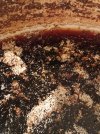
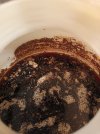
Does this look infected?

RedCat

Member
Premium Member
Established Member
Joined
Mar 20, 2025
Messages
13
Reaction score
30
Points
13
Hi all, I hope everybody's well.

So, it's bottling day, and I've opened up my fermentor to find this... There seem to be white spots on the sediment around the edges, so I suspect it's mould. I just wanted to ask for more learned opinions because the last time I bottled something that looked a bit like this, the infection definitely continued in the bottles.

In case anyone asks, yes, I've tasted it and it's not too bad, but there is something I can't put my finger on. Mind you, I tasted the last infected batch and wasn't repulsed by it, but people don't tend to like having bits floating in their beer.

This is the third time this has happened this year, and until this year, in 15 years of brewing, I've never had an infected batch. I'm curious to know what kind of infection this is.

Many thanks!

Chris
 

Attachments

  • IMG_20251213_205938.jpg
    IMG_20251213_205938.jpg
    211.1 KB · Views: 20
  • IMG_20251213_205947.jpg
    IMG_20251213_205947.jpg
    239.5 KB · Views: 14
It's hard to tell but, it certainly doesn't look right. Since you've had multiple infected batches after 15 years of no infections, I expect it's time to replace those plastic bucket fermenters. The nasties from the first infected batch is probably remained, hiding deep in some scratches in the bucket wall.
 
Agree, hard to tell, could just be krausen that hadn't fell yet. Taste it and see if it is zingy or meaty, prolly not good
 
If you've gone more than a dozen or so brews in any single bucket, you've beat the odds.
Absent the data points of other infections, I'd guess that this might just be residual krausen rafting on top. Since you've gotten infected before, that's what's going on now.
There are infections and then there are infections. Likely you have a wild yeast or brett-type organism that's throwing some odd flavors. If it was lactobacillus, you'd have an obvious pellicle and definite sour flavor.
Maybe (probably?) dump this batch but definitely dump the buckets. :)
 
Thanks for your contributions, people. I've dumped the batch now because last time this happened, I bottled it to see what would happen, and I ended up with mould at the top of each bottle. Dumping 20L from the fermentor is much less of a pain than dumping 60 individual bottles.

I'll be ordering a new fermentor tomorrow. At least that way, if it keeps happening, I'll know it's some process issue that I've overlooked. Shame really because it was a new porter recipe that actually seemed quite promising.
 
This is the third time this has happened this year, and until this year, in 15 years of brewing, I've never had an infected batch. I'm curious to know what kind of infection this is.

A point of correction: You've never had an infected batch you know of. It's entirely possible you had infections previously but the alcohol killed it. Or it just wasn't that strong an infection.

If you haven't lost a batch to infection in 15 years, either you're meticulous like Adrian Monk, or you're not brewing enough :) I've been at it almost 2x as long and have definitely lost batches to infection, owing to lack of sufficient keg cleaning & sanitation. I lost a 5 gallon 'fest this year for it. Ugh. I did not slack off, but I obviously missed something.

How long has the beer been in the fermenter and how 'big' is this porter? If you're at 6 or more %ABV, it may be strong enough to kill what you're seeing. Time will tell.
 
Haha, thanks for the correction. I would say that it's probably a bith of both. I definitely have had some quieter years during those 15, but I'm also generally very rigorous with my cleanliness. That said, I'm at my highest rate of production this year. So, if problems were going to become visible, it's logical that it should be now.

In answer to your question, it wasn't a strong porter, so I'm not sure I would rely on the alcohol help out much. I'll make it again this week and keep my fingers crossed for a successful attempt this time!
 
Be aware that aside from fermenting in plastic buckets, the bottling process introduces a lot of opportunity for infections to show up. Any sort of bottling bucket or apparatus, especially spigots of any sort, can harbor organisms. Since you've had good luck so far, it's likely that you're keeping peripherals clean and sanitary but everything is worth checking. Anything plastic is suspect - tubing, airlocks, lids, etc.
Good luck with it! :)
 
I'm at my highest rate of production this year. So, if problems were going to become visible, it's logical that it should be now.

In answer to your question, it wasn't a strong porter, so I'm not sure I would rely on the alcohol help out much. I'll make it again this week and keep my fingers crossed for a successful attempt this time!

I actually still have my first, 2nd and 3rd plastic fermenter buckets and was using them actively through about ... 2021, so about 25-ish years. I still use them, but for different things now. in 2020 I moved to Texas and started taking an inventory of my brewing process and what would possibly make it easier, more efficient, better and hopefully simpler. I was already into kegging, but had still been bottling too. I moved to kegging exclusively, then all in one brewing / brew in a bag, then to a bigger all in one, then a stainless fermenter, then another + temp control and so on and so on. There's always something over the horizon. I just snagged my 2nd pressure capable fermenter. The stainless ones are more convenient, especially if you want to harvest yeast and reuse, which is more work and more difficult, but it's cool and is a little more efficient. I would say cheaper, but in reality I don't save money harvesting yeast. I just brew more :) Importantly: they're easier to keep clean and sanitized.

What I learned about 2 or 3 years ago, losing a pretty big porter to an infection was that just because you can't see it, doesn't mean it isn't there. Now, I wash with water, then clean with an actual brewery cleaner, then after drying I inspect it. if I can see or smell anything, it goes through again. When it's ready I sanitize it with star san and seal it up when dry.

With all the new stuff I got, I started brewing more and branching out to brews I hadn't done. Most worked out well, but I had a few dog fights along the way; mostly bigger brews. I keep notes on my brews now, what happened along the way, what I'd do differently next time, if anything abnormal happened so when I go back to it, I can refresh my memory and address what I can.
I'll make it again this week and keep my fingers crossed for a successful attempt this time!
Hopefully your porter comes out ok. It'd be ok if you had to dump an IPA, but not a Porter :p
 
What I learned about 2 or 3 years ago, losing a pretty big porter to an infection was that just because you can't see it, doesn't mean it isn't there. Now, I wash with water, then clean with an actual brewery cleaner, then after drying I inspect it. if I can see or smell anything, it goes through again. When it's ready I sanitize it with star san and seal it up when dry.
Similar trajectory for me...ditching plastic and improving equipment piece by piece until I have all stainless, fully enclosed fermenters with sanitary triclamp fittings. It's a pain taking everything apart and putting it back together on the smallest ones but the half-barrel uni-tank provides a lot of bang for the buck.

My takeaway has been "trust nothing"...even with stainless, plenty of things can sneak in. It's a little tedious and tempting to cut corners but but it's best to go through the whole process every time. I take apart the fermenters and put all the fittings and seals into hot PBW solution, rinse and hand wash inside tanks to remove krausen sludge and then reassemble the tank and do a 15 to 20 minute CIP with the hot PBW, rinse through the CIP ball and then drain and slosh Star San throughout and seal it up tight.
 
I haven't ever seen what you had there, what yeast were you using?
 
My takeaway has been "trust nothing"...even with stainless, plenty of things can sneak in. It's a little tedious and tempting to cut corners but but it's best to go through the whole process every time.
My approach as well...think about the common path where your cooled wort goes....how clean is that? A transfer tube? A valve? The bucket O rings?
 
  • Like
Reactions: J A

Back
Top